
From Influence To Equity
The rise of creator investors and the shift from campaigns to company-building



With the creator economy projected to reach $480 billion by 2027 (Goldman Sachs), the industry has entered a new phase.
What was once dismissed as a space where influencers posted stories and tagged their favourite brands has evolved into something far more attractive and respected: IP-driven brands, venture-backed operating companies, and acquisition-ready businesses built on audience trust.
In 2025 alone, the creator economy saw a record 81 acquisitions (+17% YoY), according to entrepreneur and experienced M&A advisor James Creech. This shows us that there is a structural shift in how capital markets and corporations value and want to be part of creator-led businesses.
Creators are no longer accepting one-off brand deals. They are taking equity, or building their own brands. Ultimately, they are becoming business owners or investors themselves, and increasingly stepping into ‘CEO’ roles.
And it’s not about creators licensing their name to a product. It is about ownership; of IP, distribution, and long-term brand value.
But ownership comes with risk. As more brands look to accelerate growth through creator equity, one question becomes central: how do you choose the right creator partner?
The Move From Influence to the C-Suite
The past year has demonstrated that creator partnerships are being fundamentally rewritten.
At this year’s Super Bowl, MrBeast partnered with Salesforce and was granted full creative control, a level of trust historically shared with agencies or internal brand teams. Squarespace also tapped Emma Stone and last year Poppi doubled down on creator alignment, featuring Rob Rausch, Alix Earle (Poppi Partner and now investor), and Jake Shane not just for reach, but for cultural relevance and long-term resonance.
Brands are no longer optimising solely for campaign performance. They are aligning creators with longevity and brand value they no longer can strongly achieve with one-off campaigns or paid sponsorship posts. Equity is replacing CPMs and long-term brand value and involvement is replacing short-term gains.
To better understand whether this represents a short-term trend or a lasting structural change, we spoke with Avery Schrader, CEO of Modash, the influencer platform for Shopify brands:
“We’re reaching a maturation point in this cycle. A few years ago creators underestimated how hard it would be to build these brands as founders and CEOs while creating content. In fact, creators play entrepreneurship on hard mode. Others learn gradually how to build their business while slowly building an audience. Creator businesses face the pressure of millions of people showing up with massive expectations on day one.
Creators are increasingly hiring serious executive teams early and carving out more balanced roles for themselves. Chamberlain Coffee’s CEO Gustav has a finance and accounting background. MrBeast Industries has hired extremely senior product and engineering management teams. Large creators with big ambitions will continue to take on equity and build businesses — but they’ll do it with the help of seasoned operators. This is analogous to how other celebrities have operated.”
As many in the industry predicted, the creator-CEO model is maturing. What began as personality-led commerce is evolving into professionally structured operating companies.

The Rise of Building in Public
When we think about McDonald’s, Coca Cola, Reebok or Starbucks, these legacy brands were built behind closed doors. However, today’s creator-led brands are gaining success through the new term ‘building in public’.
Social media has given founders the platform to document building their business in real time, sharing product delays, supply chain challenges, funding updates, revenue milestones, and retail launches.
Electrolyte brand SULT, founded by creator Millie Goldsmith and her co-founder Henry Porpora, has documented everything from production setbacks to sell-outs and retail expansion.
The “building in public” strategy isn’t used for engagement purposes but to accelerate trust and let consumers and their community be part of building the brand.
Anna Klappenbach, Senior Partnerships Manager at Modash, explains:
“Transparency is changing how brands are built because many now rely on a loyal audience from day one — and transparency has always been a foundation of trust. When people trust a brand, they become fans and ultimately loyal customers.
Building in public also makes it easier to get a company off the ground without massive external funding. A creator’s audience is already a valuable asset. If leveraged correctly, that built-in community can drive awareness, early sales, and momentum from the outset.
That community helps spread the word, create awareness, and drive early revenue — allowing brands to scale faster and differentiate through authenticity.”
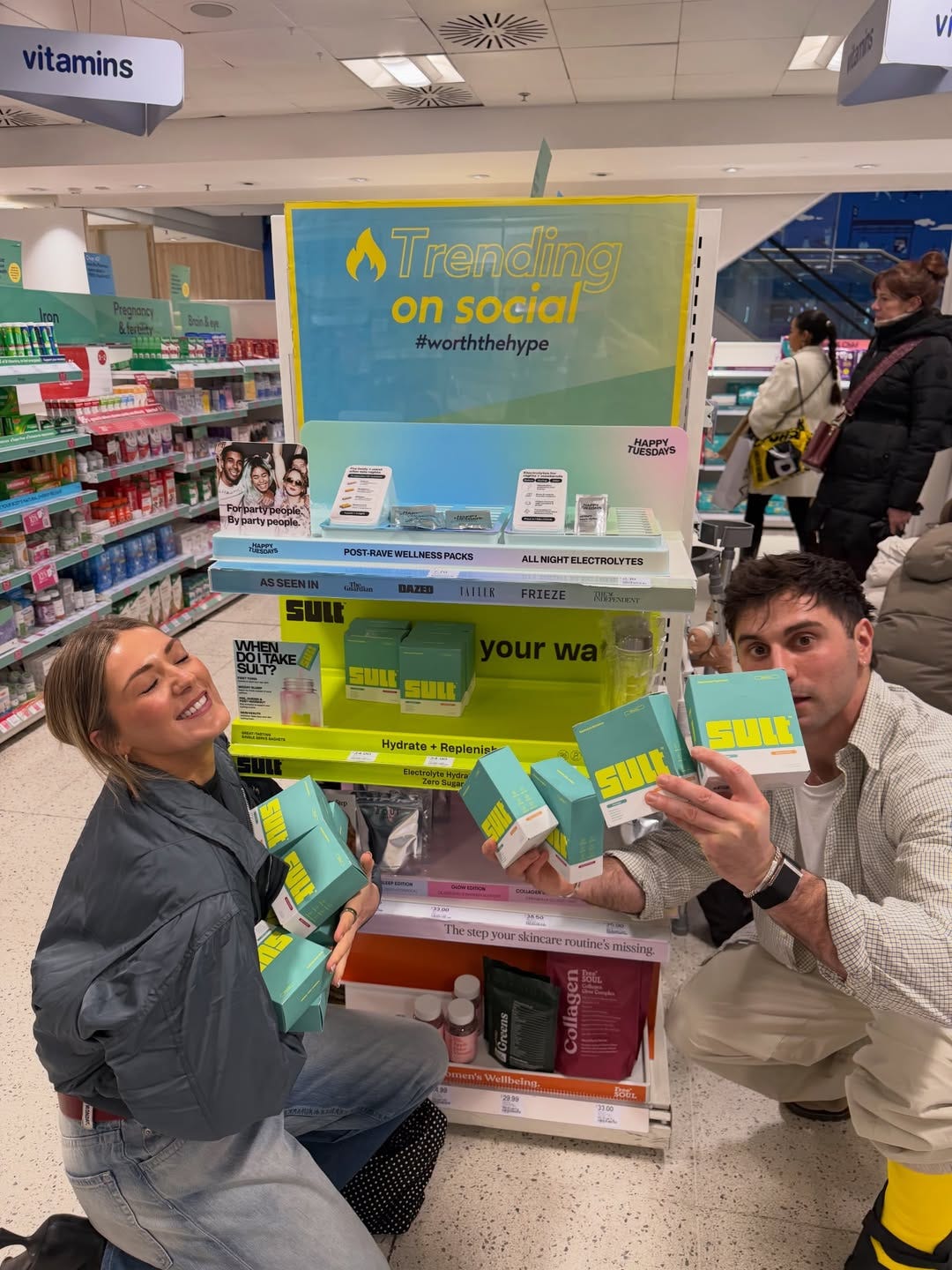
For creator-led brands, bringing the audience along the journey can be a stronger contributing factor to growth than paid campaigns alone.
Creator vs. Capital - What’s The Debate?
As creator involvement deepens, there may be a risk of creator equity eventually outweighing traditional venture capital.
Schrader offers a measured perspective:
“At the end of the day, the investor should have very little impact on the outcome of the company. If your company only works because of a name on the cap table, it won’t work for long. Some creators will be fantastic partners, others won’t. Some VCs make fantastic partners, others don’t.”
Klappenbach echoes the idea of coexistence:
“Creator involvement and venture capital can complement each other. Creators can bring independence and momentum when building a brand, which is valuable in itself. At the same time, for fast scaling or launching at significant scale, venture capital remains incredibly important.
In industries like pharmaceuticals or certain health products, development requires significant research, time, and capital. Those businesses don’t necessarily benefit more from creator involvement alone. Anything tied to long-term product development can’t simply be accelerated by a creator’s presence.
Both models can coexist very well. A creator can support or amplify a company, whether or not they’re part of the founding team. Ultimately, long-term alignment and execution matter more than labels.”
The question, then, is not creator versus capital. It is alignment between distribution, capital, and operational execution.

Why Creator Selection Is Now a Strategic Decision
With creators like Alix Earle moving from endorsement deals into equity positions, more brands are recognising that highly engaged audiences can materially impact brand value.
Equity creates mutual alignment: the creator shares in the long-term value of the business, while the brand gains credible reach and cultural currency.
But when a creator becomes part of the cap table, and not just the campaign, the implications extend far beyond marketing. The decision affects hiring, product strategy, investor perception, and long-term brand equity. This is where data becomes critical.
Platforms like Modash allow brands to move beyond intuition by analysing:
Historical brand partnerships
Organic versus paid performance benchmarks
Engagement quality across formats and channels
Audience demographics aligned with target customer cohorts
As more creators step into roles as co-founders, CEOs, investors, and long-term partners, choosing the right creator is no longer a creative decision. But a strategic one.

The creator economy is evolving into an industry of ownership. What was once distribution-driven partnerships has evolved into equity-driven alignment, where creators lead as founders, investors, and long-term stakeholders.
The rise of creator-investors signals a deeper shift in how today’s brands are built, prioritising their audience, capital, and operational expertise into a new model of growth.
For brands building this next phase, the opportunity is significant, but success will depend on selecting partners with the credibility, capability, and long-term alignment to build enduring brand value.